Most clogged toilets can be cleared by the homeowner with the right plunger and the right technique. The wrong tool, or the wrong approach, turns a small clog into a bigger problem. This guide covers which plunger to buy, how to use it, and the signs that it is time to stop and call a plumber.
If the toilet is overflowing now, do not flush again. Close the shutoff valve behind the toilet and lift the tank's flapper to stop the refill. Our toilet repair team is available 24/7 if the plunger does not work.
Which plunger to use
Plunger types and what they are for
A flange plunger is the right answer for a toilet. A flat cup cannot seal in the curved opening.
| Type | Shape | Best for. |
|---|---|---|
| Flange plunger | A cup with a rubber flap that extends | Toilets, because the flap fits into the drain opening. |
| Cup plunger | A flat cup | Sinks, tubs and flat drains, not toilets. |
| Accordion plunger | Ridged plastic body | Strong push, but harder on some bowls. |
How to plunge a toilet
Step by step
Slow, steady pressure works better than hard, fast pushes.
- 1
Get enough water. The bowl needs enough water to cover the cup. Add some if it is low.
- 2
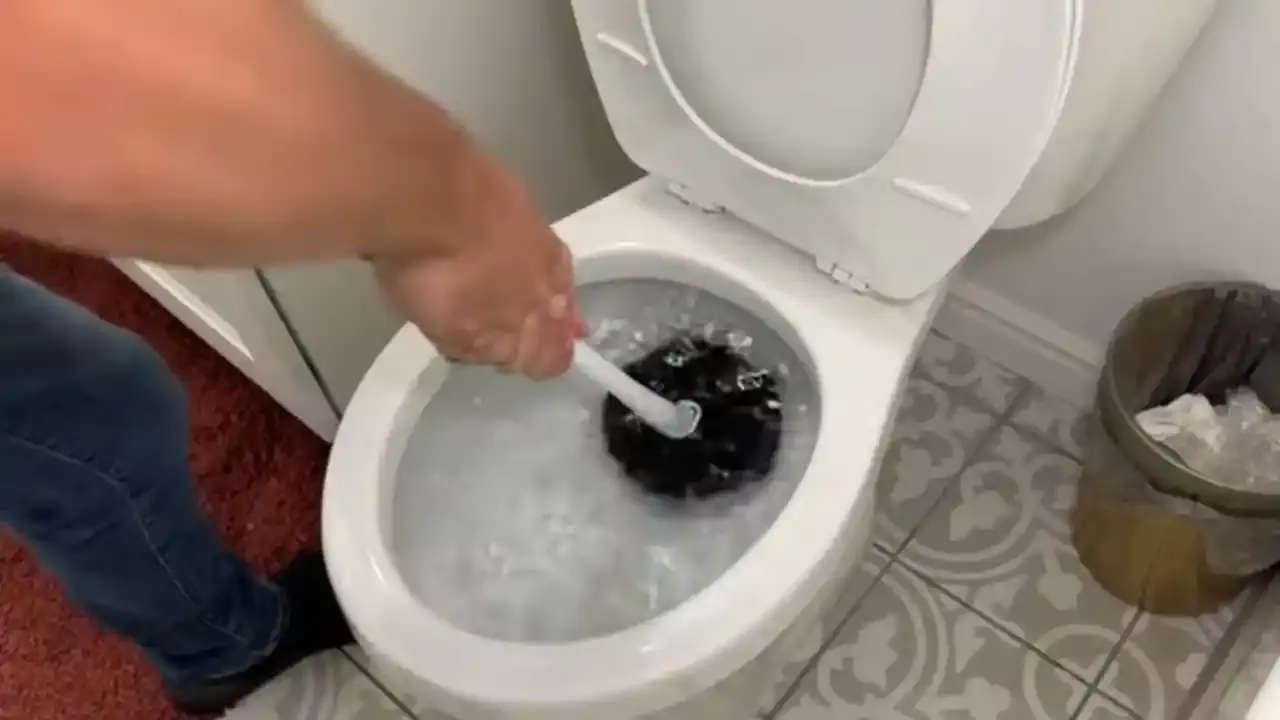
Seat the plunger. Place it over the drain opening with the flange inside and the cup sealed against the bowl.
- 3
Push gently first. A gentle first push forces out trapped air without splashing.
- 4
Plunge firmly for 15 to 20 seconds. Keep the seal. The pull stroke is as important as the push.
- 5
Check the drain. If the water drops quickly, the clog is cleared. Flush once to test.
Wear gloves, and lay down towels. Do not use chemical drain cleaners on a toilet, because they rarely clear it and leave a hazardous liquid in the bowl.
If the plunger does not work
A closet auger, sometimes called a toilet snake, reaches farther than a plunger and has a protective sleeve so it does not scratch the porcelain. If you have one, feed it into the drain and turn the handle while pushing gently.
If neither works in a few tries, stop. A solid object lodged in the trap, such as a toy, or a clog past the toilet in the main drain will not respond to repeated plunging. Our drain cleaning page explains the next step when the whole line is affected.
Signs the problem is bigger than the toilet
- Water in the tub or shower rises when you flush.
- Several drains gurgle at once.
- The toilet clogs again right after it is cleared.
- Water backs up in a floor drain.
- There is a sewage odor outside near the cleanout.
These signs point to the main line, which is a different job from a toilet clog. A camera inspection shows what is in the line.
Keeping toilets clear
- Flush only toilet paper and human waste.
- Keep wipes out of the toilet, even if the package says flushable.
- Use less paper at a time.
- Fix a weak flush early, because it is a sign of a partial blockage or a mineral-clogged rim.
Why toilets clog in the first place
Most clogs come from too much paper at once, wipes, hygiene products or a child's toy. Low-flow toilets are efficient, but some older low-flow models have weak flushes, so a small amount of waste can stall in the trap. A toilet that clogs once a month has a pattern, and the pattern has a cause.
A weak flush is an early warning
Mineral deposits can clog the small jets under the rim and the siphon jet at the bottom of the bowl. The flush gets weaker and slower, and a clog follows. A plumber can clean the jets, and sometimes a replacement toilet is the better answer. If you are shopping, check the flush rating and the trap design, because those are what make a toilet clear itself.
Douglasville: sewer or septic changes what a clog means
Douglas County's residential plumbing permit application lists county sewer and septic tank as separate sewer types, and homes in the county use both. On a septic system, repeated toilet backups can mean a full tank and not just a clog, so tell the plumber which you have.
If you are on county sewer, the Douglasville-Douglas County Water and Sewer Authority is the provider to ask about where your responsibility for the line ends. The same advice applies in Lithia Springs and the towns on our service areas page.
Georgia's state minimum plumbing code is the International Plumbing Code (IPC) with Georgia amendments, enforced locally. It sets the basics for toilet connections, so a toilet that rocks or leaks at the base should be reset properly.
Plunger not working? Call and a plumber can be dispatched.
Frequently asked questions
A flange plunger, which has a rubber flap that fits into the drain opening. A flat cup plunger is for sinks and tubs.
About 15 to 20 seconds of steady strokes, then check the drain. Repeat a few times before giving up.
It is better not to. It rarely clears a toilet clog and creates a hazard for whoever works on it next.
Heavy paper use, flushable wipes, a partial blockage in the trap or a problem in the main line can all cause it.
Yes. On a septic system, repeated backups can mean the tank needs service. Tell the plumber you have septic.
Yes. The line is open 24/7. Close the shutoff behind the toilet and call.
Call the 24/7 line and a plumber is dispatched to Lithia Springs. The service areas page lists the other towns we reach.