
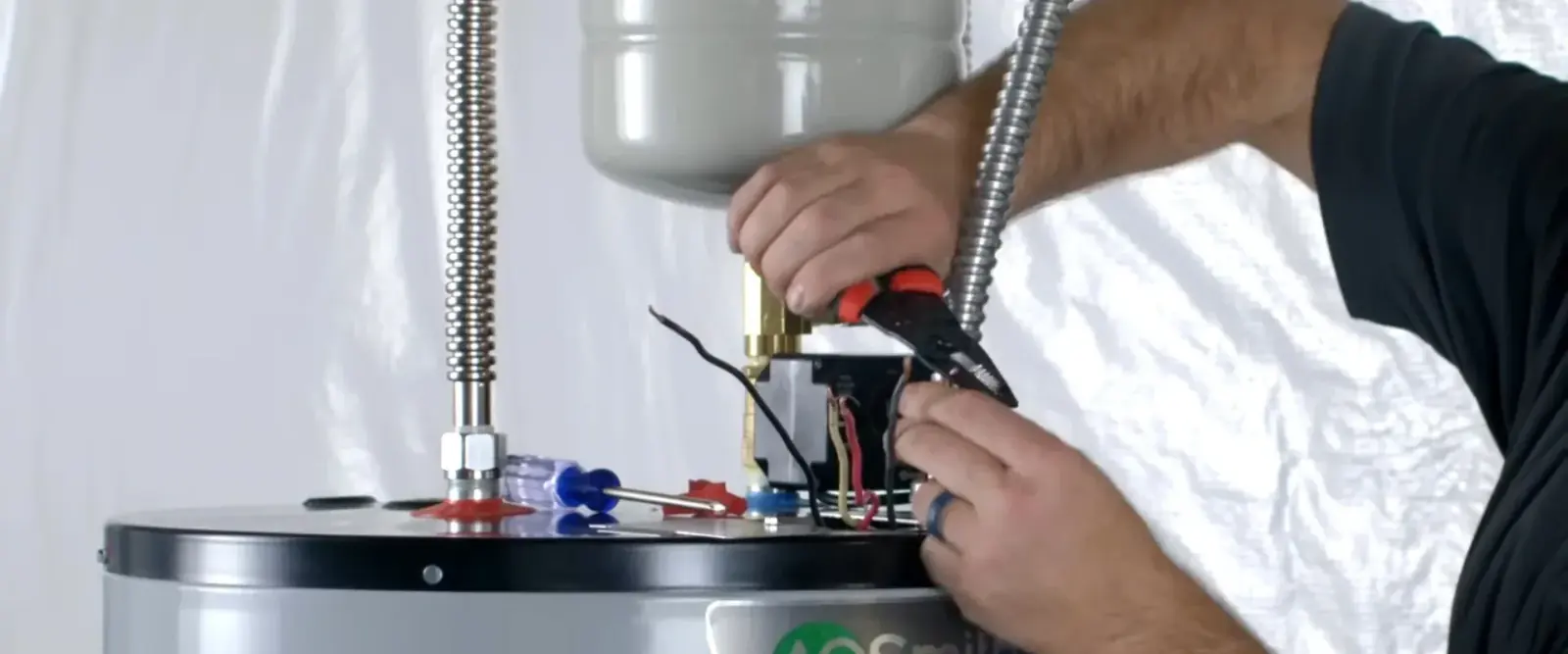
Water heater installation in Douglasville, GA starts with a question about the household, not the heater. How many people shower in the morning, whether a soaking tub or a second bathroom is on the way, and where the heater will sit all shape the answer. Our plumbers size the unit, check the fuel and venting, and quote a clear price before the work begins.
Installing a heater where none existed is different from replacing a failed one. If a tank has already burst, go to water heater replacement instead. This page is for planned work.
Sizing by household and first-hour rating
Tank capacity alone does not tell you how much hot water you get. The first-hour rating on the heater's yellow label is the number that matters, because it shows how much hot water the unit delivers in the first hour of heavy use.
Rough tank sizes by household
These are common ranges for a first conversation. Your plumber confirms them against actual fixtures and habits.
| Household | Typical tank size | Watch for. |
|---|---|---|
| One or two people | 30 to 40 gallons | Large tubs can drain it fast. |
| Three or four people | 40 to 50 gallons | Back-to-back showers and a dishwasher. |
| Five or more people | 50 to 80 gallons, or a tankless unit | Laundry and showers at the same hour. |
Choosing a fuel and a location
A gas heater needs a gas line, a flue that draws correctly and enough combustion air. An electric heater needs the right breaker, wire gauge and clearance for the panel cover. A hybrid heat pump unit needs about as much open air as a small closet and a place to drain condensate.
Garages, closets, attics and crawlspaces all work, but each changes the labor. An attic or upstairs closet should have a drain pan piped to a safe discharge point, so a future leak does not come through the ceiling.
How a planned install goes
Planned work gives us time to do each step cleanly.
- 1
Walk-through. We check the location, fuel, venting, water pressure and the shutoff valves.
- 2
Rough-in. Gas, electrical and water lines are adjusted to match the new unit.
- 3
Set and connect. The heater is placed, leveled and connected with new flex lines and a full-flow shutoff.
- 4
Safety fittings. Relief valve, discharge pipe, expansion tank where needed, and venting are installed to the heater's instructions.
- 5
Commission. Air is purged, heat output is tested and the temperature is set.
Thermal expansion and the relief valve
When a heater warms water in a closed system, the water expands and pressure climbs. A small expansion tank on the cold line gives it somewhere to go. Without one, a relief valve may drip after every heating cycle, which wears the valve and the tank.
The relief valve's discharge pipe should run toward the floor or a drain and never be capped or reduced. This one fitting is the last safety on a pressurized tank, so it is worth checking at every install.
What affects the price of an installation
You get a clear price before work starts. These items decide it.
Permits, licensing and the things to verify
Permit and inspection rules vary by address and by job, so ask the building department that covers your house. Douglas County's building department is at 4655 Timber Ridge Drive in Douglasville, and its permit application asks for the plumbing contractor's state card number.
Georgia's Division of Master and Journeyman Plumbers issues the state license. Ask for the master plumber's license number up front, and keep the install paperwork, model number and warranty registration with your home records.
Planning around Douglasville's water
The Douglasville-Douglas County Water and Sewer Authority treats surface water from the Dog River Reservoir at its Bear Creek plant, and its water quality report does not publish a hardness figure. Test your tap before you decide on a maintenance plan, because sediment shortens the life of any heater.
Code and permit points for a new install
Georgia's state minimum plumbing code is the International Plumbing Code (IPC) with Georgia amendments, enforced locally. It covers things a new install depends on, such as relief valve discharge, water connections and thermal expansion control, so ask who will check each one.
Planning an install or upgrade? Call for a clear price.
Frequently asked questions
A straight swap of the same type is often done in a half day. A new location, a fuel change or added venting takes longer.
Match the first-hour rating to your busiest hour. Most households of three to four people land in the 40 to 50 gallon range, and larger homes go bigger or tankless.
Yes. We install gas, electric and hybrid heat pump tanks, and tankless units, depending on what your house can support.
Homes with a closed system, such as those with a check valve or pressure regulator, usually need one. Your plumber checks the system pressure and tells you.
Yes, the line is open 24/7. If the tank has already failed, same-day appointments are available when a slot is open.
Ask for the plumber's Georgia license. Then contact the county building department about permits and inspections for your address.