
A slab leak is a break or pinhole in a water line that runs in or under a concrete slab foundation. It may be a hot or cold line, and it keeps leaking whether you see it or not. If you suspect one, shut off the main valve if water is spreading, and call. The line is open 24/7 for leaks that cannot wait.
Signs that water is escaping under the concrete
- A warm or hot patch on a floor that is not near a heater vent.
- The sound of running water when every fixture is off.
- A water bill that jumps with no change in habits.
- Damp carpet, buckled flooring or tile that has lifted.
- Cracks in walls or floors that appear after a wet spell.
- Reduced water pressure at fixtures.
Not every one of these means a slab leak. A leaking water heater or a hose bib can cause some of the same symptoms, so a plumber confirms the source before recommending any work.
How we find it
First, the meter test. If the meter moves with everything off, a line between the meter and the house, or inside it, is leaking. Then we isolate hot and cold systems and pressure test sections of pipe to narrow the area.
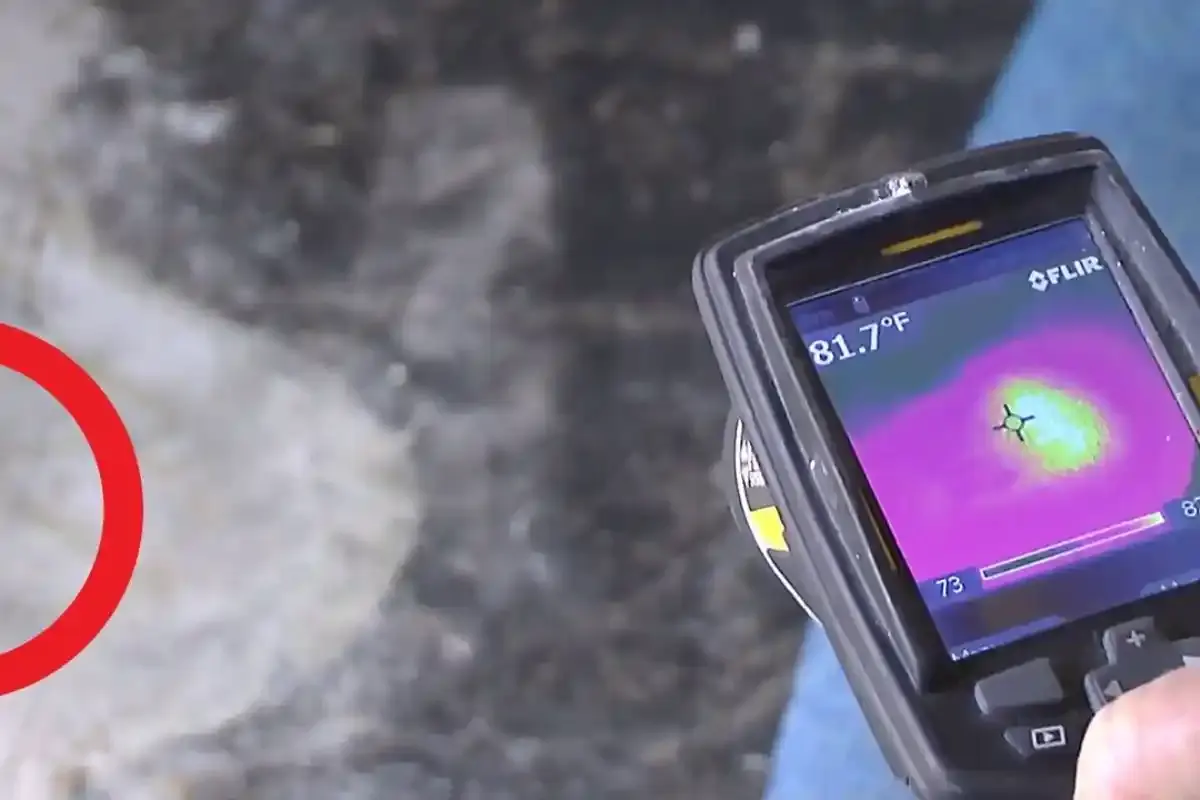
Acoustic listening and thermal imaging then locate the exact spot, which limits the amount of concrete that has to be opened. The leak detection page explains the general process, and slab work follows it closely.
Repair options for a slab leak
The right option depends on the pipe material, how many leaks there are and the layout of the house.
| Option | How it works | Best when. |
|---|---|---|
| Spot repair through the slab | Cut a small opening, repair the section, patch the concrete | One accessible leak in otherwise sound pipe. |
| Reroute through walls or attic | Abandon the slab line and run new pipe overhead | Pipe is failing in several places. |
| Epoxy or lining | Coat the inside of the pipe | Pipe shape and condition allow it, and the leak is small. |
| Whole-house repipe | Replace supply lines throughout | Old or failing pipe is a pattern, see repiping. |
Why lines leak under slabs
Copper lines can develop pinholes from corrosion, from water chemistry or from abrasion against concrete as the pipe expands and contracts. Settling and soil movement put stress on joints, and Georgia's Piedmont clay soils swell and shrink with rainfall. A line that rubs against a sharp edge in the slab can wear through over years.
High water pressure speeds it up. A pressure regulator that has failed can push pressure well above the safe range, so a good plumber checks pressure at the same visit.
What a slab leak repair visit looks like
The work is organized to limit disruption.
- 1
Confirm the leak. Meter, pressure and acoustic tests tie the leak to the slab.
- 2
Mark the spot. The locator marks where to open, and furniture and flooring are protected.
- 3
Open and repair. A small section of floor and concrete is cut and the pipe repaired.
- 4
Test and close. The line is pressure tested before the slab is patched.
- 5
Dry and report. Wet materials are identified and you get notes for your insurer.
What affects the cost of slab leak repair
You get a clear price before work starts. The factors are these.
Insurance and documentation
Many homeowners' policies cover sudden water damage caused by a hidden leak but not the pipe repair itself. Some cover the cost of reaching the leak. Policies differ widely, so read yours.
Keep your water bills, photos of the damage and the plumber's findings. A report that ties the damage to a specific leak makes a claim easier to support.
A slab leak is a case where waiting costs more than acting. Water moves soil under the foundation, and warm slab floors mean a hot water line is losing heat and money day and night.
Emergency slab leak: what to do before the plumber arrives
- Close the main water valve if water is spreading.
- Turn off power to any wet area and do not touch outlets standing in water.
- Move rugs, boxes and furniture off damp floors.
- Take photos and note the meter reading.
- Keep the water bill for your insurer.
Code points for slab repairs
Georgia's state minimum plumbing code is the International Plumbing Code (IPC) with Georgia amendments, enforced locally. It governs pipe materials and installation, so a rerouted line or a replaced section is expected to meet it, and a permit may apply.
Think you have a slab leak? Call and a licensed plumber is dispatched.
Frequently asked questions
Yes. The line is open 24/7. If water is spreading, close the main shutoff and call right away.
Warm floor spots, the sound of running water when everything is off, and a rising bill are the main signs. A pressure test and acoustic tools confirm it.
Often, yes. The locator narrows the spot, and the opening is limited to that area.
Sometimes. If pipe is failing in several places, running new lines through the attic or walls avoids repeated slab work.
It depends on the number of leaks, the method and the flooring. We give you a clear price before work starts.
Permit rules vary. Ask the Douglas County building department, whose application lists underground water service lines among its items.