
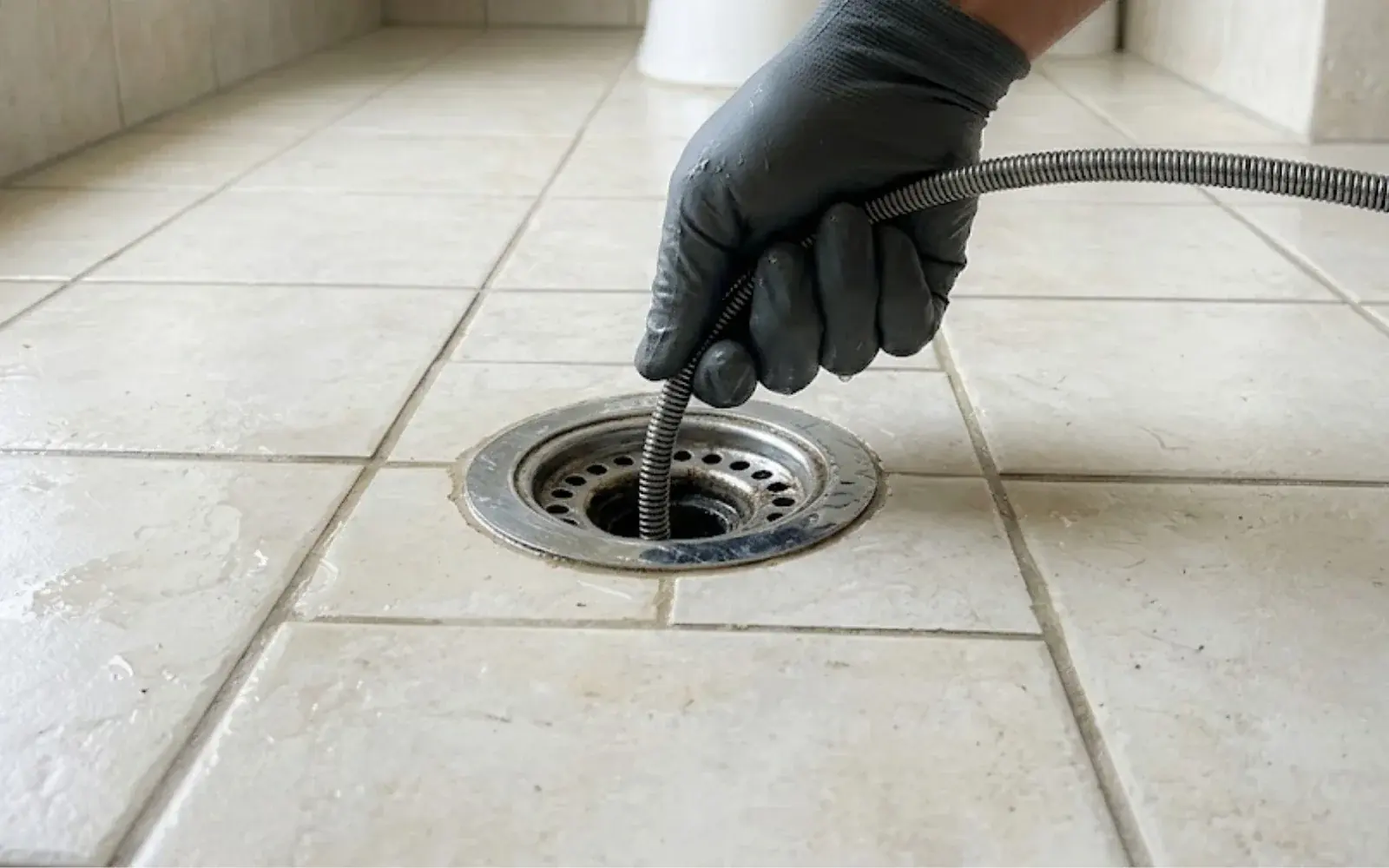
When the main sewer line is blocked, every drain in the house is affected. Water has nowhere to go, and the lowest fixture in the house, often a basement shower, tub or floor drain, is where the backup shows first. This is an emergency, and our line is open 24/7 to dispatch a plumber.
While you wait, stop all water use in the house, keep people out of any wet area, and do not flush toilets. Every flush adds more water to a line that cannot take it.
Emergency main line blockage: what blocks a sewer line
Most main line clogs are not a single event. They are a slow build of grease, paper and debris that narrow the pipe until something small closes it. Tree roots, flushed wipes and pipe offsets turn a narrow pipe into a blocked one.
Common causes and the tool that fits
| Cause | Sign | Usual tool. |
|---|---|---|
| Roots in joints | Repeat backups, slow drains in warm months | Root-cutting cable, then jetting. |
| Grease and soap | Gurgling and slow drains, worse after cooking | Jetting. |
| Wipes and paper | Sudden backup after a party or heavy use | Cable and retrieval. |
| Belly in the pipe | Standing water in the camera view | Cleaning now, repair later. |
| Foreign object | Sudden complete blockage | Cable, camera and retrieval. |
How a main line cleaning works
The sequence from the cleanout
Work starts at the cleanout, not the toilet, whenever possible.
- 1
Find the cleanout. A cleanout gives direct access to the line and is the safest entry point.
- 2
Cable the blockage. A machine cable opens the line and clears the immediate stoppage.
- 3
Scour if needed. Jetting cleans the pipe wall when the buildup is heavy.
- 4
Look with a camera. The camera shows what remains and what caused the clog.
- 5
Report and plan. You get the findings, any repair needs and a care plan.
Our hydro jetting page explains when scouring is the better choice than a cable, and the drain cleaning page covers branch lines that clear without a main line visit.
Sewer or septic: it changes the plan
Douglas County's residential plumbing permit application lists county sewer and septic tank as separate sewer types, and homes in the county are served either way. If your house is on county sewer, the cleaning clears the lateral to the connection. If it is on septic, a blocked outlet or a full tank may be the cause.
Tell the dispatcher which you have when you call. A septic system needs a different set of questions, and a tank pump-out is a separate service from a sewer line cleaning.
Keeping a cleaned line clean
- Put only toilet paper and human waste in the toilet, never wipes, even ones marked flushable.
- Collect cooking grease in a can and throw it out.
- Keep large trees away from the line's path when planting.
- Have a camera inspection if the line has clogged more than once in a year.
- Know where your cleanout is and keep it accessible.
What affects the cost of sewer cleaning
You get a clear price before work starts. The usual drivers are these.
Why cleanouts matter
Georgia's state minimum plumbing code is the International Plumbing Code (IPC) with Georgia amendments, enforced locally. It calls for cleanouts in building drains, and good access is what lets a cable or jetter reach the blockage without opening the ground.
Main line blocked? Call and a licensed plumber is dispatched.
Frequently asked questions
Yes. The line is open 24/7. Stop using water, avoid flushing, and keep people out of any area where sewage has come up.
Only when there is a problem or a repeat pattern. Lines with roots or heavy grease may need a regular schedule, and a camera tells you if yours does.
The lowest fixture shows a main line blockage first. The washer's discharge adds more water than the narrowed pipe can carry.
No. Wipes marked flushable still do not break down like toilet paper and are a frequent cause of main line blockages.
Check your property records or ask the Douglasville-Douglas County Water and Sewer Authority. Tell us when you call so we send the right equipment.
No. It clears the blockage, but a camera look will show if the pipe needs repair.