
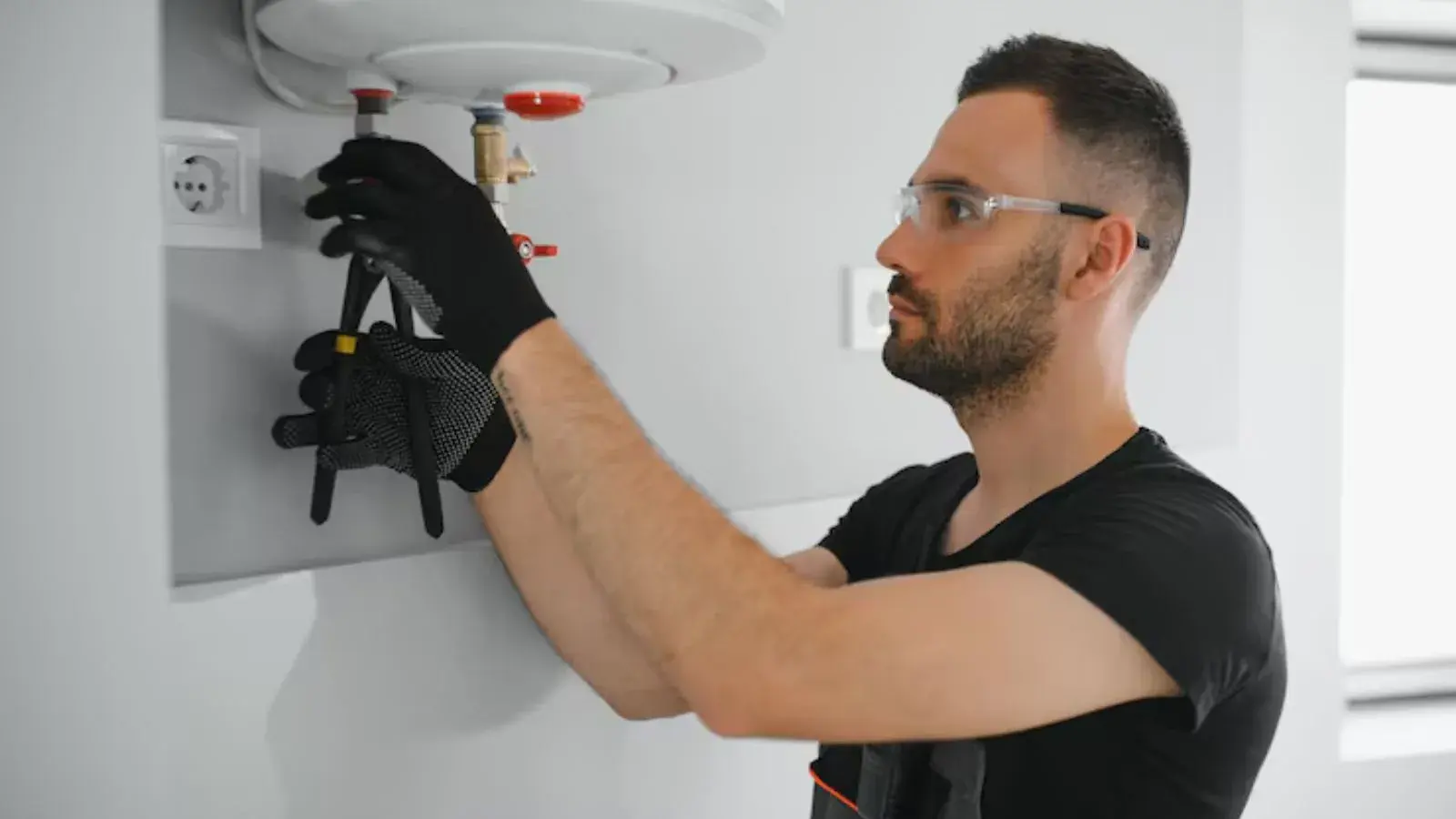
Electric tank water heaters heat water with two immersion elements, one near the top and one near the bottom. Each is a metal rod that glows hot when power passes through it. When an element burns out or gets coated in mineral scale, the heater loses output, and the symptoms are easy to mistake for a bigger failure.
This guide covers the signs of a bad element, how a plumber tests it, what a replacement involves and when it is not worth doing. If you have no hot water at all and a wet floor, skip ahead to the safety section and call. The water heater repair page covers emergencies, and our line is open 24/7.
Signs an element has failed
- Hot water that runs out in a few minutes, which usually means the lower element is dead.
- Lukewarm water that never gets hot, which can point to the upper element.
- No hot water, which can be an upper element, a thermostat or a tripped high-limit switch.
- A breaker that trips whenever the heater runs, which suggests an element that has shorted to the tank.
- Rumbling or sizzling noises from the tank, usually scale on the elements.
These symptoms overlap with thermostat failure, which is why testing matters. Replacing an element that was fine does nothing, and a heater with a failed thermostat will keep failing no matter how many elements you put in.
How elements are tested
A plumber shuts off the power at the breaker, removes the access panel and insulation, and confirms the power is dead with a meter before touching anything. Each element is then checked for resistance across its terminals, and for a short to ground. A reading of zero or infinity points to a bad element.
This is not a job to improvise. Water heaters run on 240 volt circuits, and a single mistake can be dangerous. If you are not trained to test live electrical equipment, leave it to a licensed plumber or electrician.
Element problems and what they look like
| Finding | What it means | Next step. |
|---|---|---|
| Open circuit on the element | Element burned out | Replace the element. |
| Resistance to the tank wall | Element has shorted | Replace the element and check the tank for leaks. |
| Element covered in scale | Heat transfer is poor | Descale or replace, and flush the tank. |
| Elements test fine | Thermostat or high-limit may be the cause | Test thermostats and the reset switch. |
What a replacement involves
The swap, in order
A replacement is a short job on a tank that is otherwise sound.
- 1
Power off and verified. The breaker is switched off and the wiring confirmed dead.
- 2
Tank drained below the element. Water is shut off and the tank is partly drained so the element can come out without a flood.
- 3
Old element removed. A special socket loosens it, and the gasket surface is cleaned.
- 4
New element installed. The same wattage and type go in with a new gasket and are tightened to the manufacturer's setting.
- 5
Refill and test. The tank is filled and air is purged before power is restored, because an element run dry burns out within seconds.
That last point is the one homeowners miss. Turning the power back on before the tank is full destroys a new element.
When a new element is not the answer
If the tank is leaking, rusting or past 10 to 12 years, new elements postpone the problem. A tank that is rumbling heavily has a deep layer of sediment on the bottom, and the lower element may be buried in it. Flushing helps, but a badly scaled tank is often at the end of its life.
In that case water heater replacement is the better spend. We explain the trade-off honestly, because replacing a part on a tank that is about to fail wastes money.
What affects the cost of an element swap
A clear price comes before work starts. The element is cheap, and the other factors decide the bill.
Preventing the next failure
Elements fail faster when they are buried in scale. A yearly drain-and-flush removes loose sediment before it hardens, and it lets you see how bad the buildup is. If a lot of grit comes out, the tank is telling you something about its remaining life.
Set the thermostat no higher than you need. A setting around 120 degrees is a common recommendation, because hotter water speeds scale and raises the scald risk in a house with children or older adults. Check the anode rod every few years as well, because the rod protects the tank and a consumed one is a reason to plan ahead.
What to do before you touch the heater
- Switch off the breaker and confirm the power is dead with a meter.
- Close the cold water supply.
- Do not work on a heater that is leaking near wiring.
- Do not turn power back on until the tank is full.
- Call a licensed plumber if you are unsure.
Douglasville: water, permits and your heater
The Douglasville-Douglas County Water and Sewer Authority draws Douglas County's drinking water from the Dog River Reservoir and treats it at the Bear Creek plant. Its 2026 water quality report does not list a hardness figure, so test your tap. Mineral scale on an element is the visible result of hard water, and a yearly flush slows it down.
Douglas County's residential plumbing permit application lists water heaters as a fee item, so ask the county building department whether your swap needs one. If you live in Lithia Springs, the same county office applies, see plumbing in Lithia Springs.
Georgia's state minimum plumbing code is the International Plumbing Code (IPC) with Georgia amendments, enforced locally. A water heater repair does not change that, but a leaking tank or a failed relief valve is a reason to look at replacement.
Our service areas page lists the towns we dispatch to for water heater calls. If you are not sure whether your heater needs an element, a thermostat or replacement, call and a licensed plumber will look at it.
Cold showers and not sure why? Call for a plumber to test the heater.
Frequently asked questions
If you run out of hot water fast, the lower element is the usual suspect. If the water is only lukewarm, the upper element or a thermostat may have failed. A meter test confirms it.
It is possible with the right tools, but it involves 240 volt power and a tank that must be drained. If you are not trained for that, call a plumber.
Many last several years, and hard water scale shortens that. Flushing the tank slows scale buildup.
The tank was likely not full when power was restored. An element heated in air burns out in seconds.
Wear on the heater is generally not covered. Sudden water damage from a leaking tank may be, so check your policy.
A part swap and a full heater replacement are different. Ask the Douglas County building department, whose permit application lists water heaters as a fee item.
Yes. Homes in Lithia Springs have the same electric heaters and the same element problems, and a plumber can be dispatched there. See the service areas page for the other towns we cover.